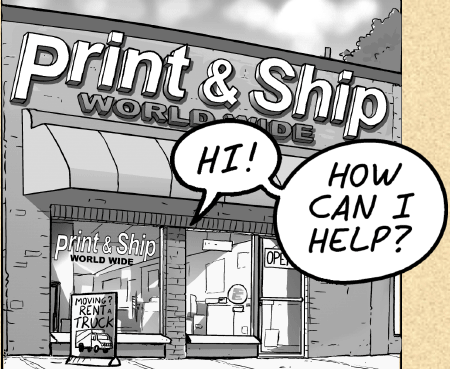
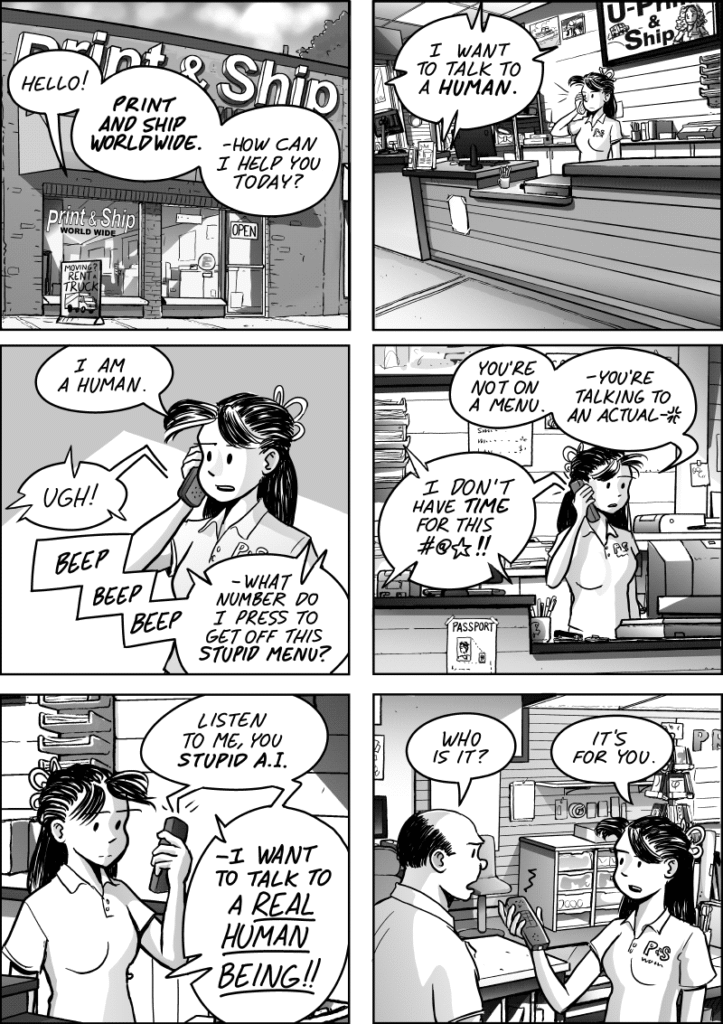
These days, if you happen to have a professional phone voice, a caller might be forgiven for not knowing if you’re real.
You might also think that any confusion could be cleared up quickly enough. Even with Ai becoming as slick as it has been lately, it still needs a few seconds to send a voice signal to a giant computer server, crunch through a massively complex bit of sci-fi math and formulate a response. Computers are fast, but humans are a lot faster. On the phone, a three second delay to answer a basic question is a good giveaway.
In animation, as 3D movies became popular and animation studios pushed further and further toward simulating realism, they discovered a phenomenon they dubbed the, “Uncanny Valley”. -Essentially, the closer an animation model got to looking exactly like a real human, the more unsettling it was to the viewer. Unless a rendering was exactly real, a viewer’s, “Something is Wrong!” sense would trigger.
In the world of simulated voices and simulated thinking with Ai, we appear to be experiencing the same phenomenon. A little delay in response time, or a suspicious error in any of the dozens of micro signals humans naturally communicate with (but don’t think about), the more we are alerted that “Something is Wrong”.
However, apparently if you’re frustrated and committed to a (rude) diagnosis, backing up to say, “Whups! I’m sorry. I thought you were a robot!”, is also too difficult for some customers.